

Vintage sarees (often 30–70+ years old) carry unmatched soul — from the gentle fade of natural dyes to the luminous patina of aged zari. One key to truly appreciating (and collecting) them is understanding prints versus patterns.
- Prints are surface decorations added after weaving (block printing, kalamkari hand-painting, discharge, etc.).
- Patterns are repetitive designs created during fabric formation (woven jacquard/brocade, tie-dye bandhani, ikat resist).
This difference affects drape, durability, texture, and how the saree ages. Let's explore accurately with examples!
Prints in Vintage Sarees: Surface Artistry & Storytelling
Prints involve applying color and motifs directly onto already-woven fabric. Vintage prints often use:
- Block printing — carved wooden blocks stamped with natural dyes.
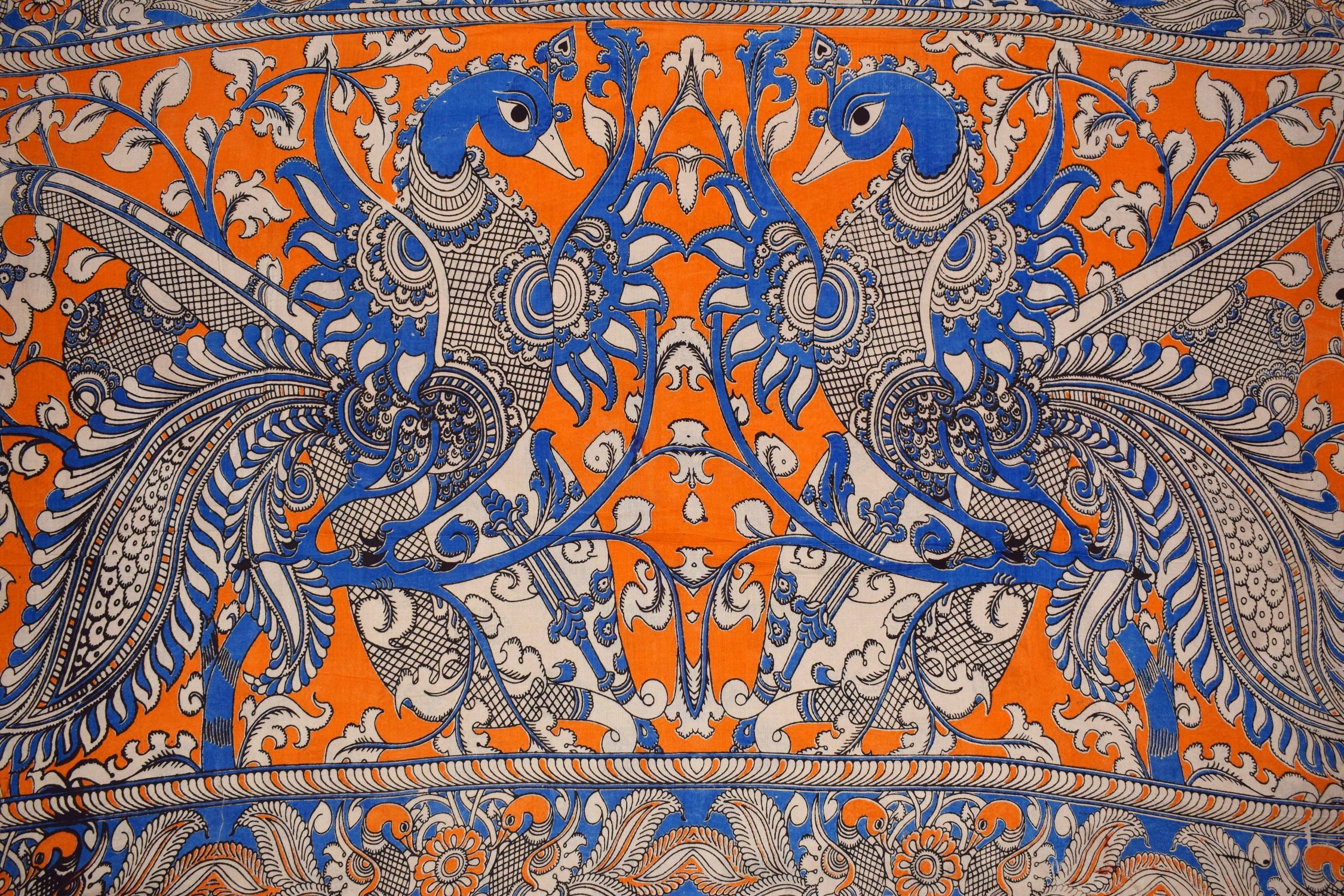
- Kalamkari — hand-drawn outlines with vegetable dyes and filled motifs.
- Ajrakh — symmetrical block-printed geometrics with resist and mordant dyeing.
These create artistic, narrative designs — often scattered or border-focused rather than perfectly tiled. Prints show more on the front, fade gracefully over time, and feel flatter to the touch.
Classic vintage kalamkari sarees feature hand-painted mythological scenes or peacocks in rich earthy tones — pure storytelling on cotton or silk.
.jpg)
Patterns in Vintage Sarees: Woven Rhythm & Structural Beauty
Patterns emerge from the weaving process or resist techniques that penetrate the yarn:
- Woven patterns — jacquard loom creates repeating motifs with extra weft (zari florals, butis, checks).
- Bandhani — tie-dye dots resist-dyed in stages for tiny repeating circles.
- Ikat — yarn-dyed before weaving for blurred, repeating geometric/floral forms.
These are seamless, visible on both sides, textured (raised zari or puckered bandhani), and extremely durable — ideal for heirlooms.
Vintage Banarasi silk with woven zari buti (small floral motifs) and paisley repeats — gold threads integrated into the fabric for luxurious flow.


Prints vs Patterns in Vintage Context
| Feature | Prints (Block / Kalamkari / Ajrakh) | Patterns (Woven / Bandhani / Ikat) |
|---|---|---|
| Creation Method | Applied on surface after weaving | Formed during weaving or yarn resist-dyeing |
| Texture & Sides | Flat, mostly front-visible; soft fade over time | Textured/raised (zari) or puckered; both sides same |
| Repetition Style | Often scattered, artistic, borders; less uniform | Seamless tiling, rhythmic, all-over flow |
| Durability & Aging | Can fade/blend softly; surface may wear first | Highly durable; colors & motifs hold deep |
| Vintage Examples | Kalamkari peacocks, Ajrakh geometrics | Banarasi butidar, Kanjivaram checks, Bandhani dots |
| Best Use | Artistic, boho-retro, lighter occasions | Grand, formal, heirloom drapes |


