

This Earth Day, Don’t Buy New — Buy Meaningful 🌸
The fashion industry is one of the largest polluters on the planet, and most of us don’t see where our discarded clothes actually end up. Every time we toss an unwanted T-shirt or pair of jeans, it joins a growing global crisis. But there’s hope — and you can be part of the solution by choosing vintage and second-hand fashion.
The Textile Waste Crisis: A Global Emergency
The numbers are staggering. The world produces over 100 million tons of textile waste annually, and this figure continues to rise with fast fashion’s “buy more, wear less” model. In the US alone, the average person discards about 68 pounds (31 kg) of clothing every year. Globally, 85-92% of all discarded textiles end up in landfills or are incinerated.

What Actually Happens to Your Discarded Clothes?
When you donate or throw away clothes, only a small fraction gets a second life:
- Less than 1% is recycled into new clothing (due to blended fabrics and technical challenges).
- Around 12-15% is downcycled into lower-value items like rags or insulation.
- The rest (over 70%) heads to landfills or incinerators, or gets shipped to developing countries where markets are overwhelmed.
- In places like Ghana’s Kantamanto Market or Chile’s desert dumps, millions of garments pile up, many never worn, slowly breaking down over decades.
- In cities like Delhi, Mumbai, and Kolkata, women recyclers sort through mountains of used sarees daily.
- Synthetic fabrics (polyester, nylon) can take 200+ years to decompose.
- Cotton releases methane in anaerobic landfills.
- Burning textiles emits CO₂ and toxic fumes.
The fashion industry already accounts for 10% of global carbon emissions — more than international flights and maritime shipping combined.
 The environmental impact of the fast fashion industry | Infographic & Stats

Beautiful Solutions: Upcycling & Recycling Sarees
Indian artisans and brands are turning old sarees into stunning new products:
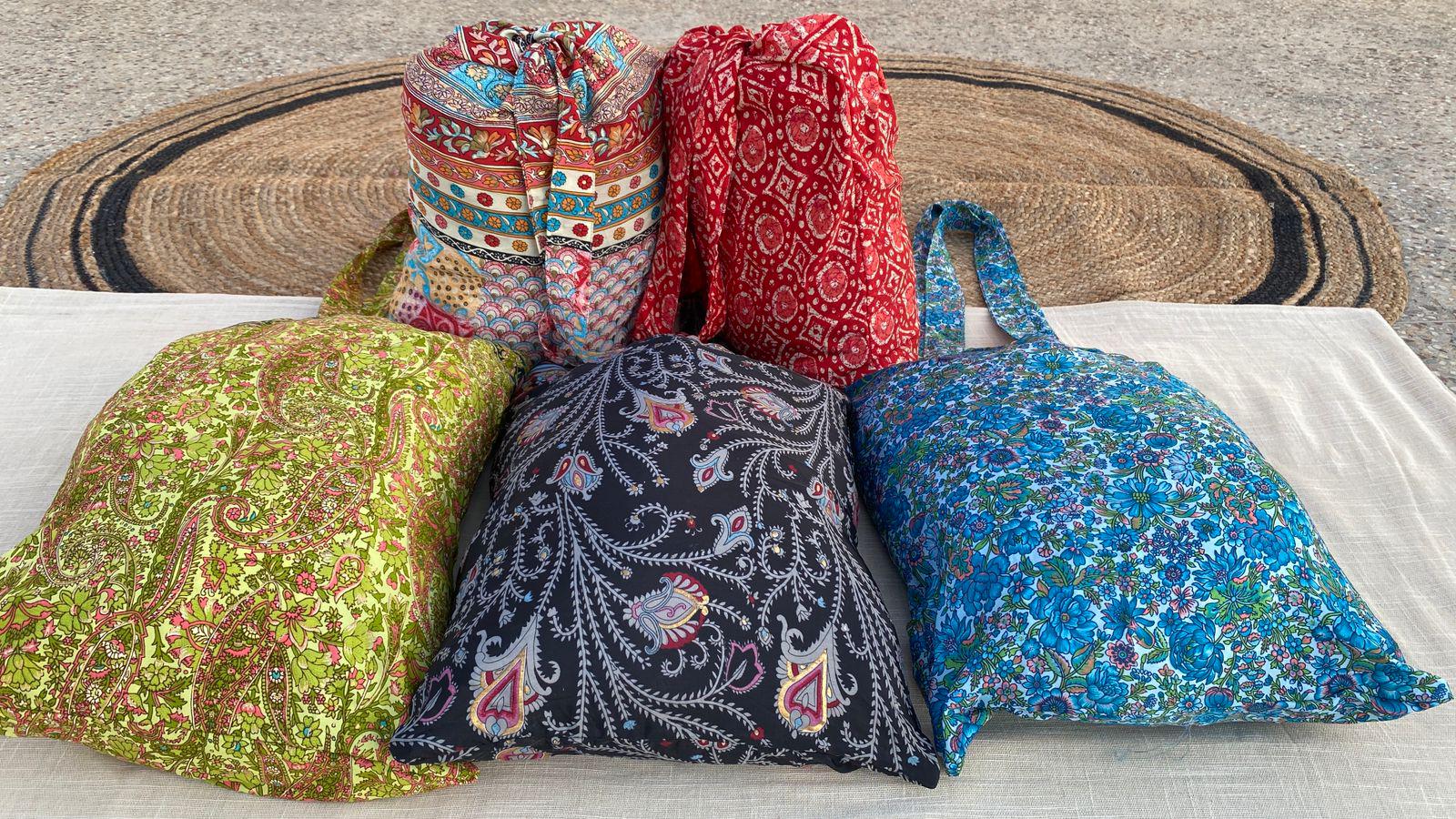
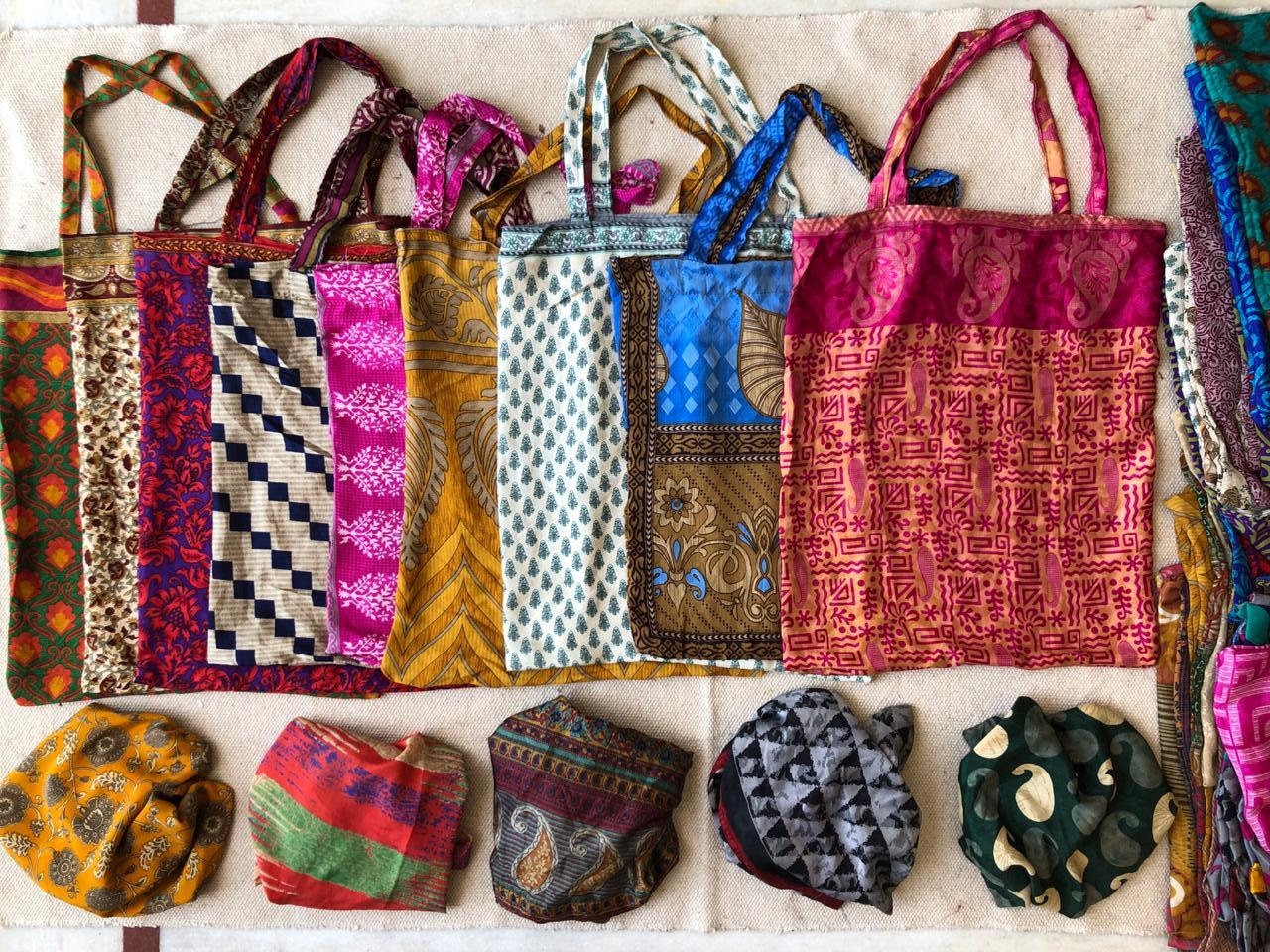 Popular upcycled saree creations:
- Tote bags, pouches & backpacks
- Kantha quilts & home decor
- New dresses, skirts, jackets & blouses
- Cushion covers & accessories


:upscale()/2021/12/13/717/n/1922564/afc67aa461b7712c2df1c9.87746102_.jpg)

These upcycled pieces support women artisans, reduce waste, and give old sarees a beautiful new life.
The Powerful Solution: Buy Vintage, Buy Second-Hand
Every time you choose a vintage or pre-loved garment, you prevent new production and keep existing items in circulation. One vintage purchase can save thousands of liters of water, kilograms of CO₂, and reduce the demand that fuels overproduction.
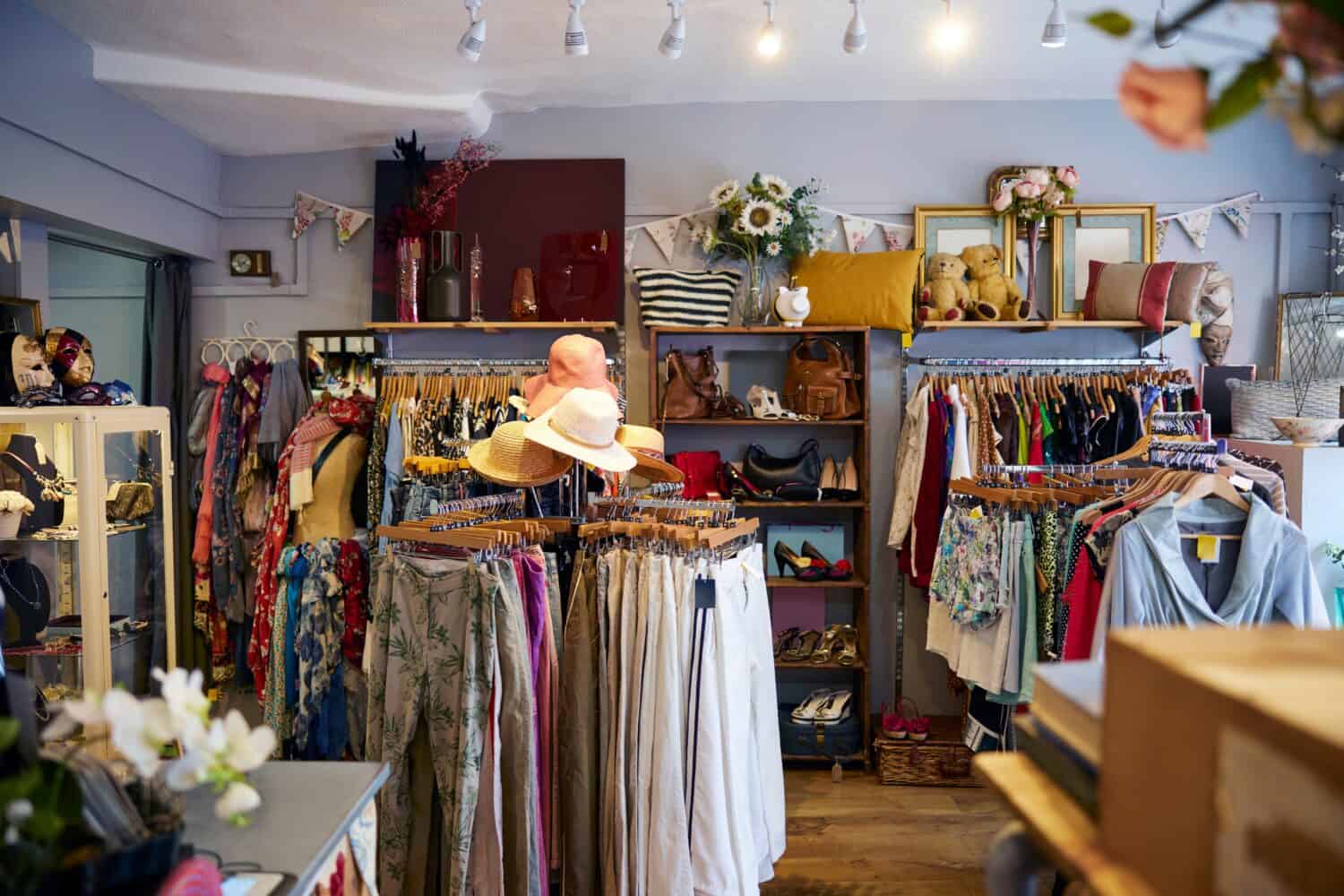
Why vintage works so well:
- It already exists — zero new resources needed.
- Unique styles with stories and better craftsmanship than most fast fashion.
- Supports small businesses, thrift stores, and circular economy models.
- Reduces landfill pressure dramatically.

 Thrift shopping, vintage markets, resale apps, and swapping events are transforming how we dress. When you buy meaningful pieces you truly love and will wear for years, you break the cycle of disposable fashion.
This Earth Day: Take Action and Make It Meaningful
Don’t buy new — buy pre-loved. Challenge yourself this month:
- Shop your own closet first.
- Visit a local thrift or vintage store.
- Use resale platforms for quality brands.
- Host or join a clothing swap.
- Repair and care for what you own.
Your choices matter. One person choosing vintage might seem small, but millions doing it creates massive impact — fewer landfills, cleaner oceans, lower emissions, and a more conscious fashion culture.
Be part of the solution. This Earth Day, wear your values. Choose clothes with history, purpose, and longevity. The planet (and your style) will thank you.
What’s one vintage or second-hand find you’re proud of? Share in the comments and inspire others to join the movement! ♻️
Let’s make sustainable fashion the norm, not the exception.
Reuse Heritage. Reduce Waste. Sanskriti Vintage
Explore our collection:-
https://www.sanskritivintage.com/collections/


