

As someone from Indore, Madhya Pradesh, I've grown up surrounded by the timeless elegance of our state's handloom sarees. Chanderi and Maheshwari sarees are two of the most celebrated weaves from our region — both GI-tagged, both born from centuries of craftsmanship, yet each with its own distinct personality.
In this educational guide, we'll explore their history, unique features, key differences, and practical ways to identify authentic pieces. Whether you're a saree enthusiast, a cultural learner, or planning your next handloom purchase, this will help you appreciate these treasures better.
1. The Legacy of Chanderi Sarees
Chanderi sarees originate from the historic town of Chanderi in Madhya Pradesh. Their roots go back to ancient times, with references in epics, and they gained royal patronage during the Mughal era for their luxurious, feather-light quality.

These sarees are typically woven from a fine blend of silk and cotton (sometimes pure silk or tissue silk), creating a sheer, almost translucent fabric with a subtle natural sheen. The body often features delicate scattered motifs — small florals, peacocks, geometric butis, or coin patterns — woven directly into the fabric.
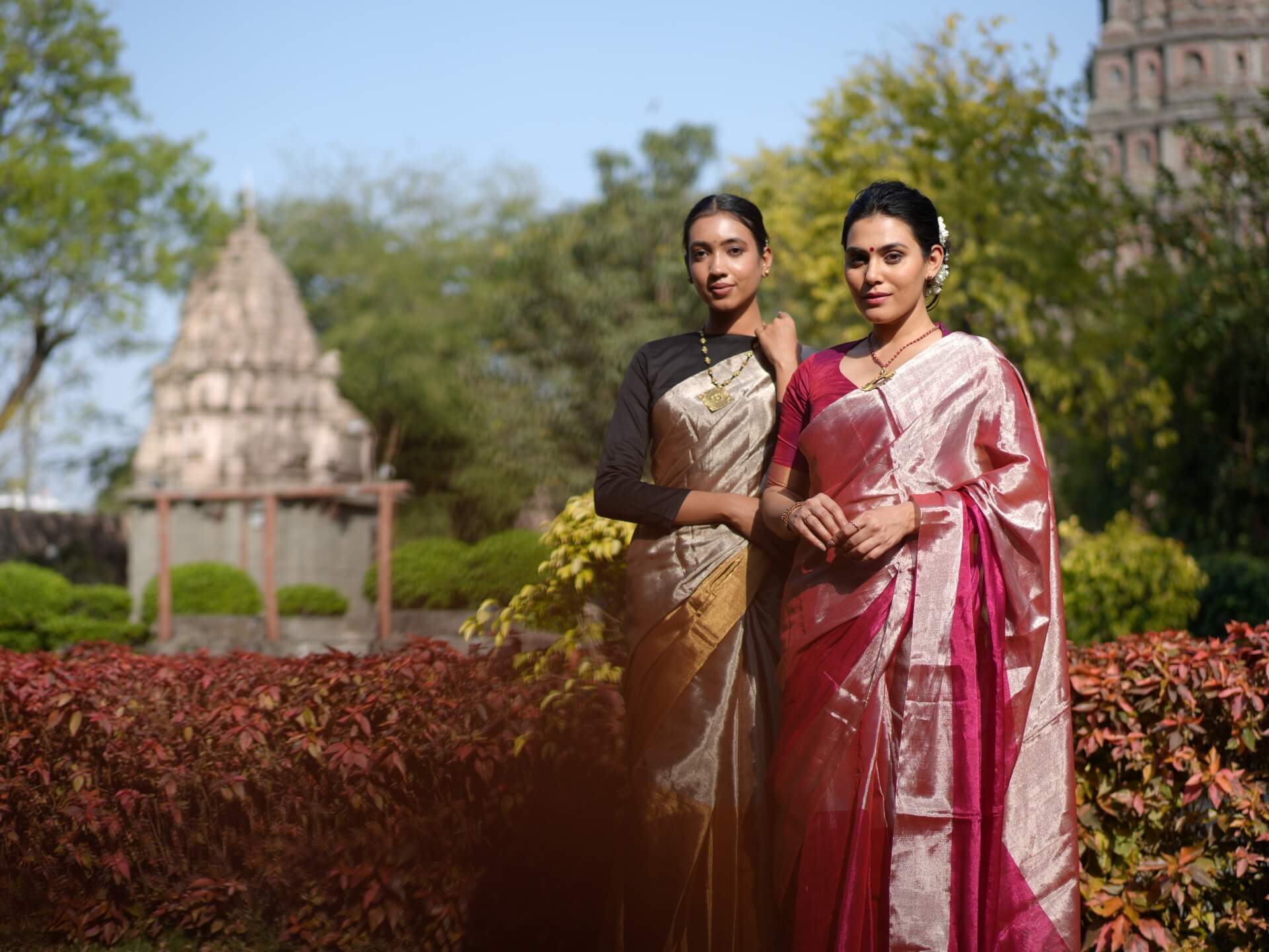
The pallu and borders shine with intricate zari work, often in gold or silver, giving a regal yet airy appearance. Chanderi sarees are perfect for warm weather and formal occasions because of their breathable, papery texture.
2. The Royal Charm of Maheshwari Sarees
Maheshwari sarees come from Maheshwar, a picturesque town on the Narmada River banks. They were conceptualized in the 18th century by the legendary Queen Ahilya Bai Holkar to revive weaving and provide elegant attire for royal guests and weavers.Made from a balanced cotton-silk blend, Maheshwaris offer a crisp, structured drape with excellent comfort and durability. Designs are bold and architectural — inspired by Maheshwar fort motifs — featuring geometric patterns, stripes, checks, swans, or jasmine flowers.

A defining feature is the reversible border (bugdi), where zari patterns look identical on both sides, plus a signature five-striped pallu with horizontal zari lines. These sarees feel vibrant and resilient, making them ideal for everyday elegance or semi-formal events.
3. Side-by-Side Comparison: Chanderi vs Maheshwari
| Feature | Chanderi Saree | Maheshwari Saree |
|---|---|---|
| Origin | Chanderi town (ancient + Mughal influence) | Maheshwar town (18th century, Queen Ahilya Bai) |
| Fabric | Silk-cotton blend, often sheer | Cotton-silk blend, crisp and balanced |
| Texture | Lightweight, papery, translucent | Soft yet structured, good body |
| Motifs | Scattered butis, peacocks, florals across body | Geometric, stripes, checks; minimal body motifs |
| Border | Heavy zari, jacquard/brocade style | Reversible zari borders (same on both sides) |
| Pallu | Ornate woven motifs | Five distinct stripes with horizontal zari |
| Best Suited For | Formal occasions, summer evenings | Daily wear, travel, semi-formal events |

Both sarees represent Madhya Pradesh's rich weaving tradition, but Chanderi leans toward delicate luxury while Maheshwari emphasizes royal simplicity and practicality.
4. How to Identify Authentic Handloom Pieces
Spotting genuine handloom Chanderi or Maheshwari sarees is important to support artisans and avoid fakes.
- Touch Test — Chanderi feels papery and sheer (hold against light to see transparency). Maheshwari feels crisp yet soft.
- Weave Check — Look for natural slubs and minor irregularities — signs of handloom. Powerloom versions look too perfect.
- Border Reversibility — Flip Maheshwari border; it should match exactly on both sides. Chanderi borders are usually one-sided.
- Zari Quality — Genuine zari is soft; gently scratch — it shouldn't flake or feel stiff.
- GI Tag — Authentic sarees often have Geographical Indication labels or weaver cooperative marks.
Preserving Our Heritage
These sarees are more than fabric — they're living stories woven by skilled hands in Chanderi and Maheshwar. Buying authentic pieces helps sustain families and traditions that have endured for generations.
 If you're in Madhya Pradesh, consider visiting the weaving clusters in Chanderi and Maheshwar — it's an unforgettable experience!

