

Origin & History
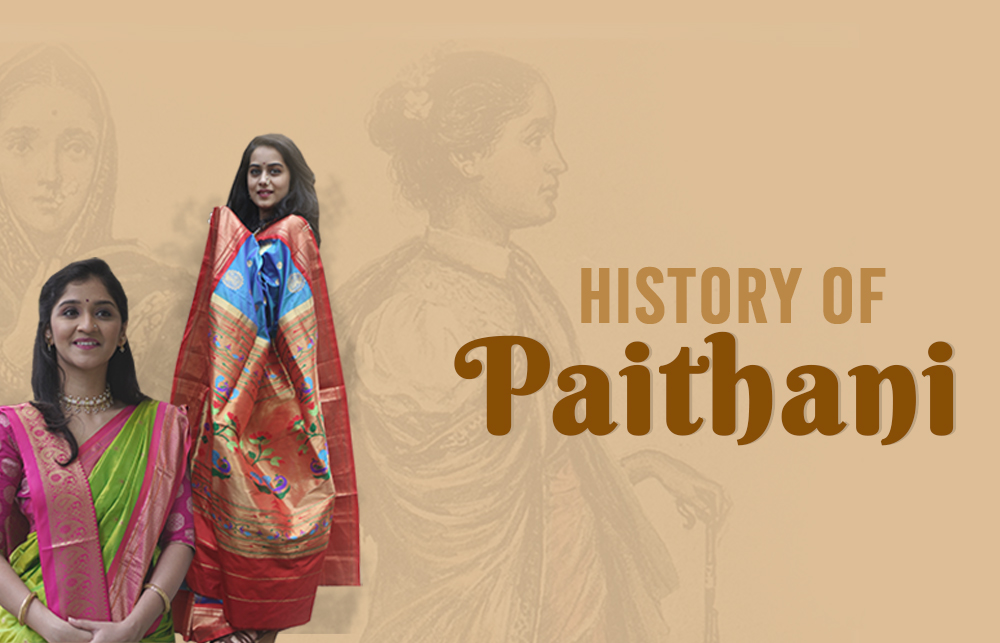
Paithani sarees trace back over 2,500 years to Paithan (ancient Pratishthan) on the Godavari River in Maharashtra. During the Satavahana era, they were traded for gold with Greco-Roman merchants. Later patronized by Peshwas and Nizams, they became symbols of royal luxury. Today, Yeola (Nashik) leads production, while Paithan remains the historic heart.
Cultural Significance & Uses
Known as the "Queen of Silks," Paithani represents grace, prosperity, and Marathi pride. Brides wear them for weddings, and women choose them for festivals (Gudi Padwa, Diwali), ceremonies, and special occasions. These heirloom pieces are passed down generations and often gifted as blessings.
The Making Process – Step by Step
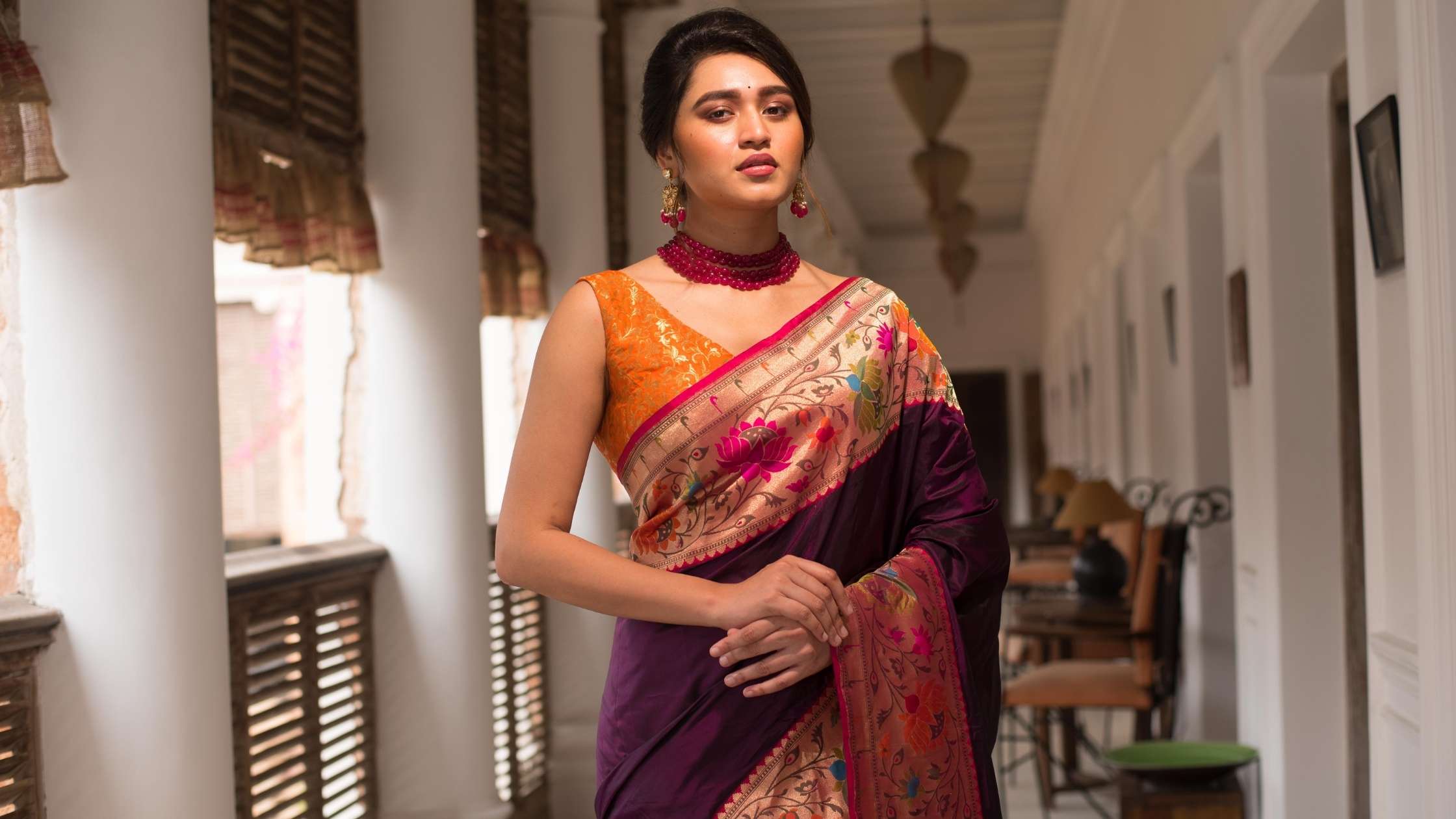
Crafting one Paithani takes 2–6 months using mulberry silk and pure zari on handlooms with tapestry techniques.
-
Raw Materials
Mulberry silk from Karnataka + zari from Surat.
-
Yarn Dyeing
Silk is scoured, dyed in vibrant shades (magenta, peacock blue, green), and dried.

-
Design & Pattern
Motifs (peacocks, parrots, lotuses, vines) sketched or digitized.

-
Loom Setup
Warp & weft threads aligned on pit/frame loom over days.
-
Weaving Body & Borders
Pallu woven first with zari motifs; body gets small buttis (dots); interlocking weft for seamless joins.

-
Finishing
Saree removed, inspected, fringes tied, polished for rich sheen.

Paithani sarees blend ancient skill with timeless beauty — true treasures of Maharashtra.


